Caves of Hercules
A cave on the Atlantic coast 14 kilometres west of Tangier. Part of it is natural and part was quarried for millstones.
Half natural, half quarried
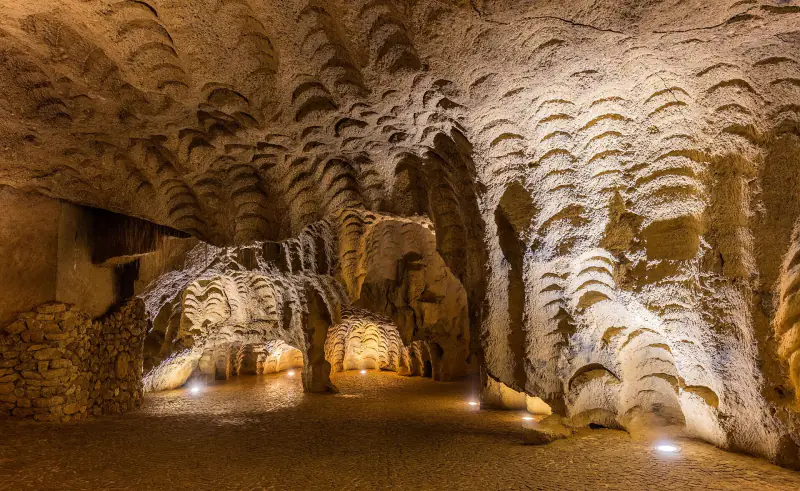
The sea cut the first cave into the soft rock of the headland. For centuries local people then cut round millstones from the walls, which left rows of circular hollows and enlarged the chambers.
According to legend Hercules rested here before one of his labours. The Strait of Gibraltar, where the Pillars of Hercules stand, is a few kilometres away.
Caves of Hercules at a glance
- Location
- Cape Spartel, 14 km west of Tangier
- Type
- sea cave, enlarged by quarrying
- Known for
- sea opening shaped like Africa
- Quarried for
- millstones
- Legend
- resting place of Hercules
- Time needed
- 30–45 minutes
- Nearby
- Cape Spartel lighthouse
- Access
- ticketed entrance
The opening to the sea
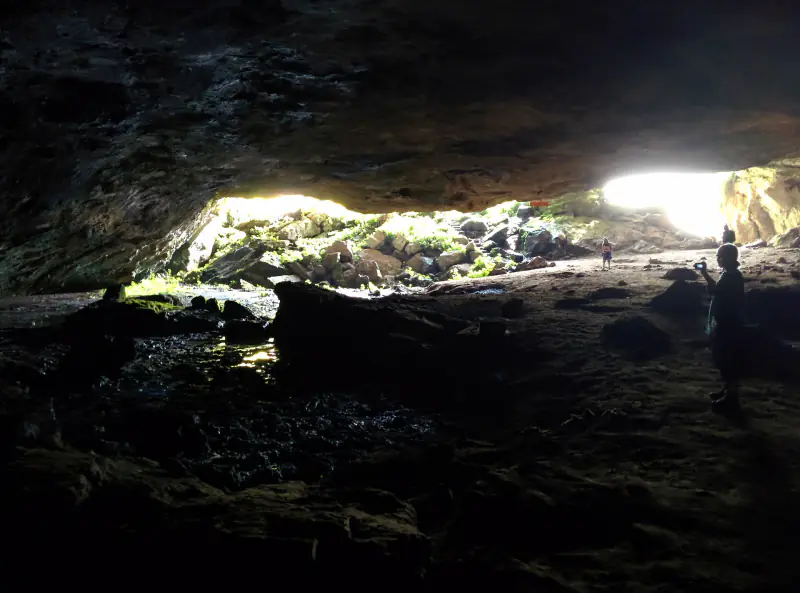
The main chamber has an opening to the Atlantic. Seen from inside, its outline resembles a map of Africa, and this is the photograph most visitors take.
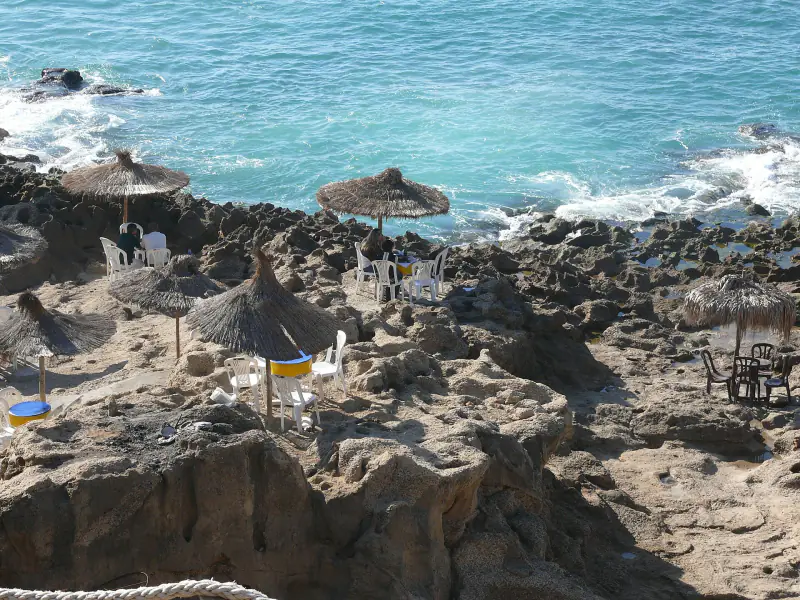
At high tide the sea comes into the lower part of the cave.
Caves of Hercules in figures
In pictures
Select a photograph to enlarge it. Authors and licences are listed in the photo credits.
Before you go
Getting there
Taxis from Tangier take about 20 minutes. The road passes the Cape Spartel lighthouse, where the Atlantic meets the Mediterranean.
On the visit
The cave is small and can be crowded in summer. Floors are wet near the sea opening.
Good to know
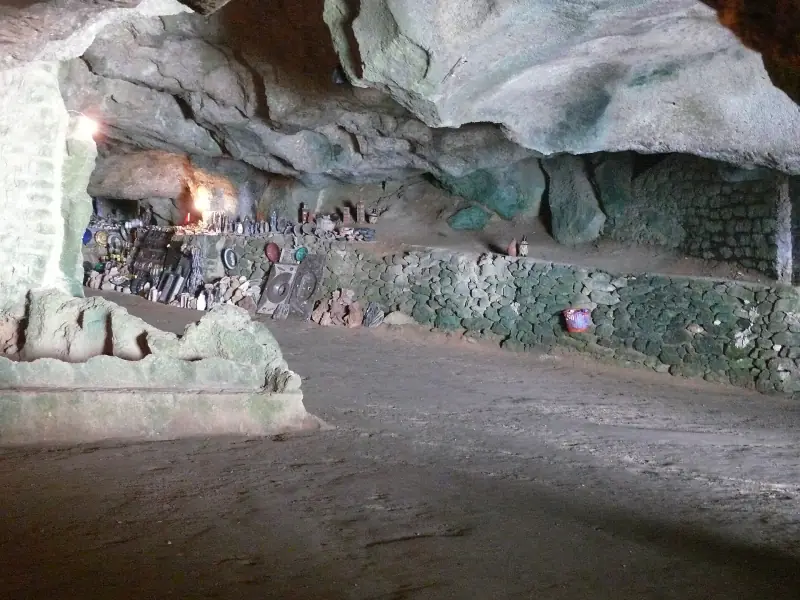
The light on the sea opening is best in the afternoon. Souvenir stalls fill part of the cave.
Opening times, access rules and prices change. Confirm them before you travel: the ticket office at the site.