Rock art & early culture
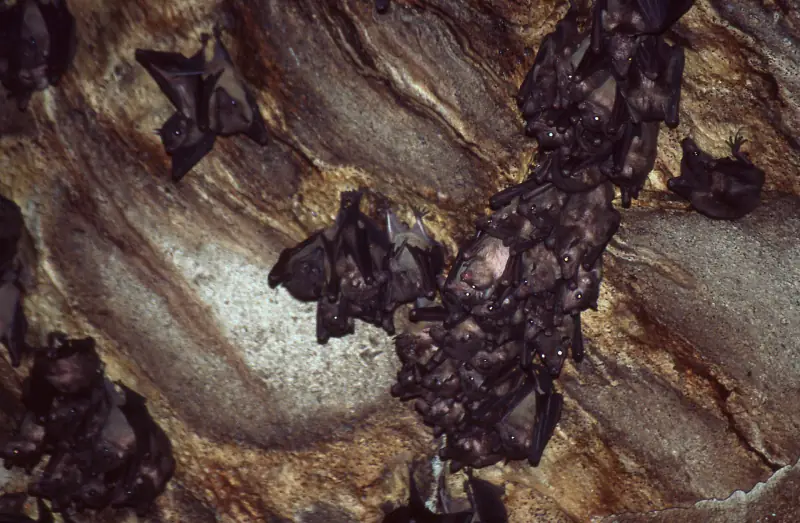
Caves and rock shelters hold some of the earliest evidence of symbolic behaviour.
Evidence from the floor and the walls
Cave sediments record what people did there. In southern Africa they contain some of the oldest known signs of symbolic thought: engraved ochre, shell beads and geometric drawings.
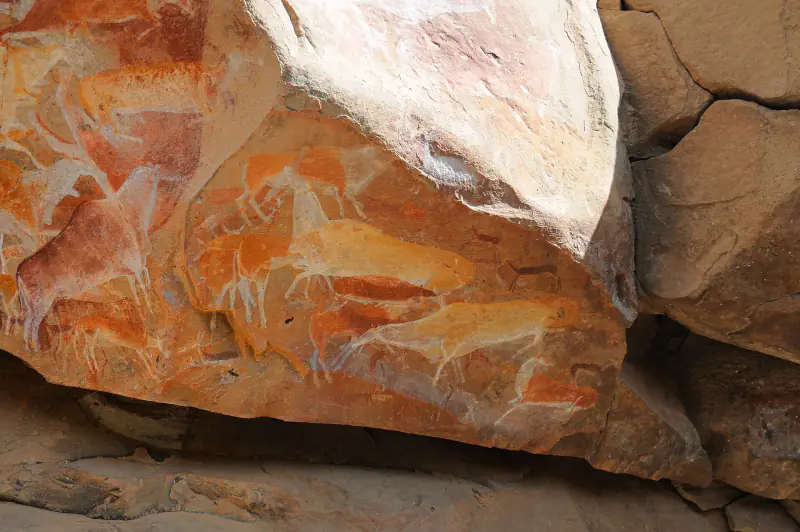
Rock shelters across the continent also carry paintings and engravings. Most are much younger, but they form one of the largest bodies of rock art in the world.
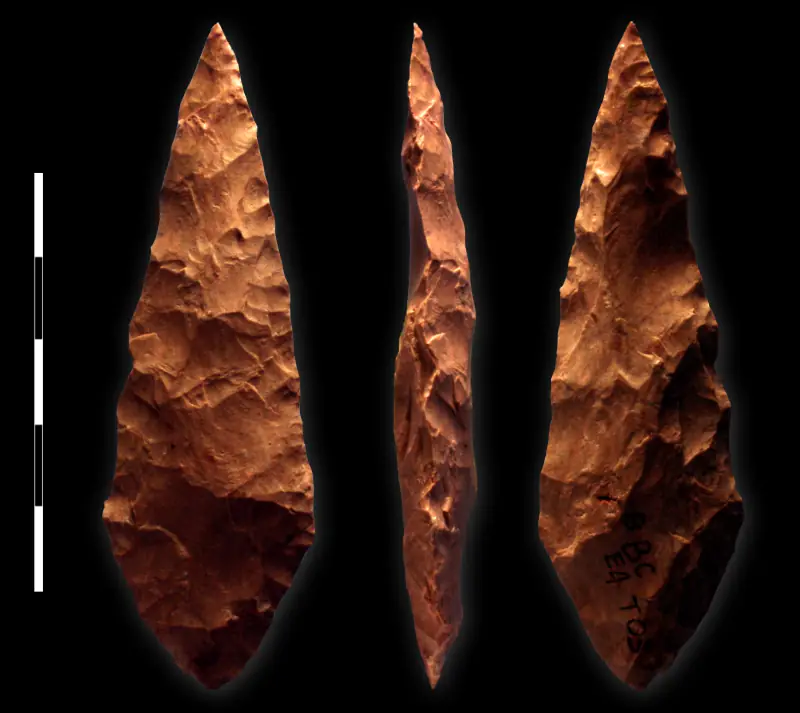
Engraved ochre, 75,000 years old
Blombos Cave is on the southern Cape coast of South Africa. Excavations since the 1990s have found pieces of ochre engraved with cross-hatched lines, shell beads and bone tools in layers about 75,000 years old.
A small stone flake with a red cross-hatched pattern, about 73,000 years old, has been described as the earliest known drawing. The cave is not open to visitors.
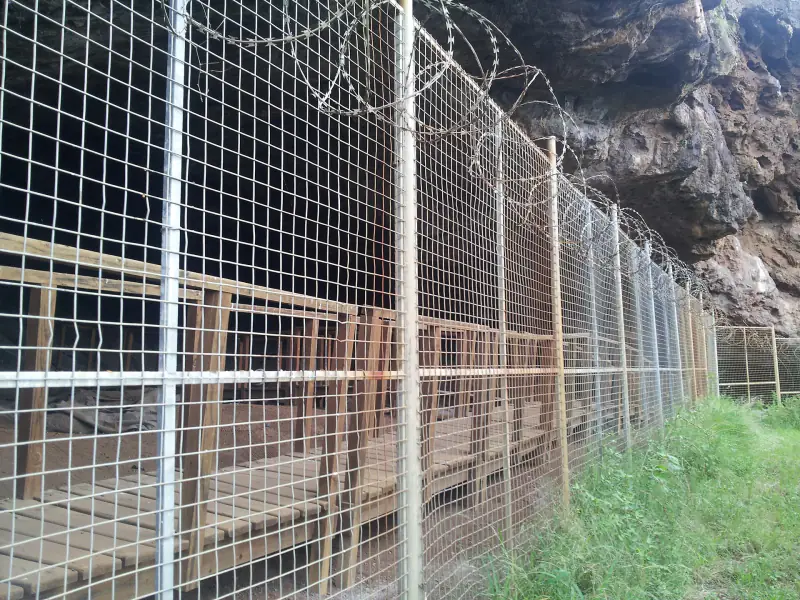
A long record in the Lebombo hills
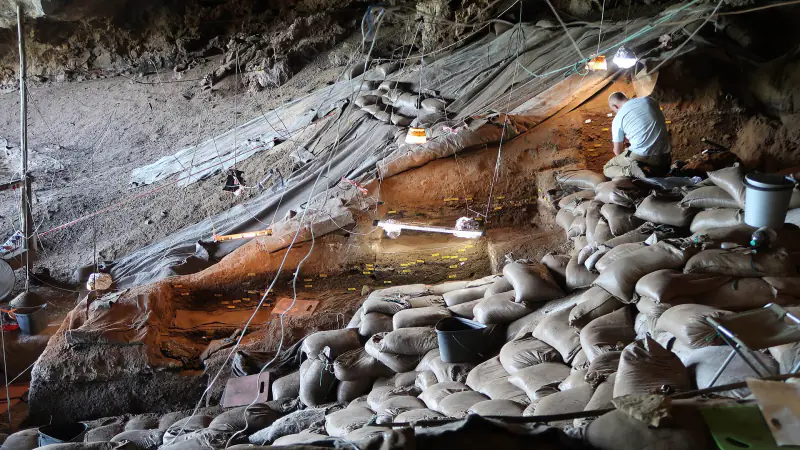
Border Cave lies on the border of South Africa and Eswatini. Its deposits span about 200,000 years. Finds include grass bedding and a notched bone that may have been used for counting.
San rock paintings
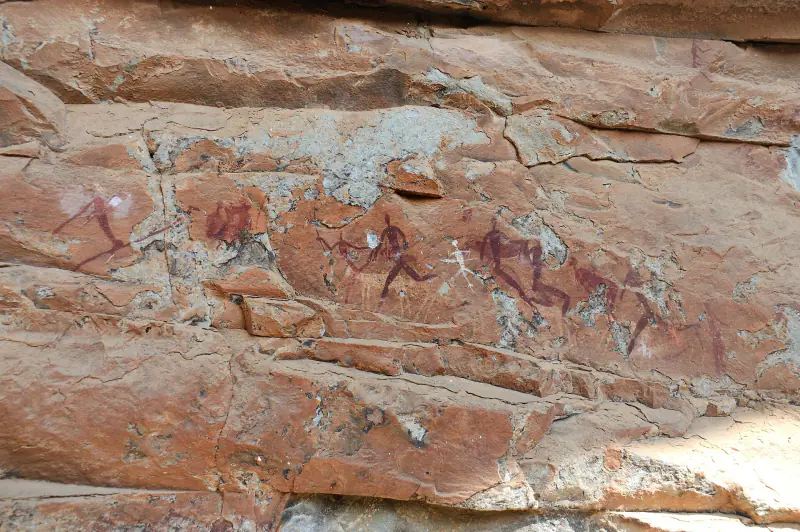
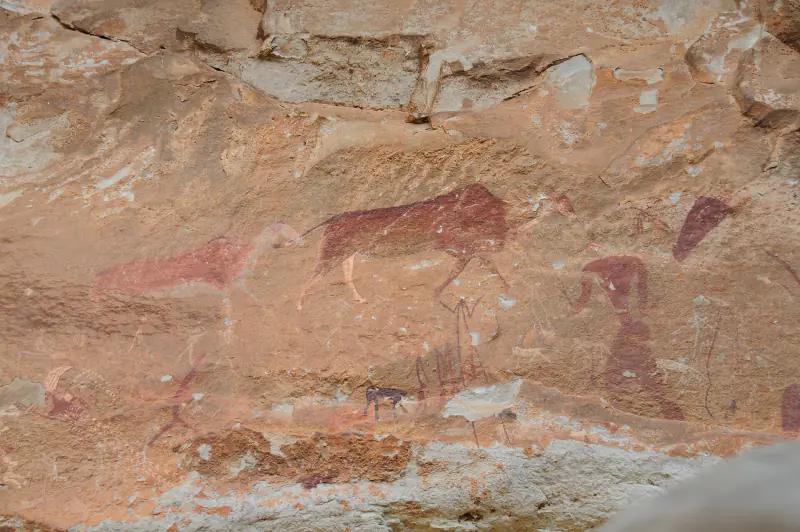
The sandstone shelters of the Drakensberg contain tens of thousands of paintings made by San hunter-gatherers over about 4,000 years. The eland is the animal painted most often. The area is a World Heritage Site, and several shelters can be visited with a guide.
In pictures
Select a photograph to enlarge it. Authors and licences are listed in the photo credits.