Otjikoto Lake
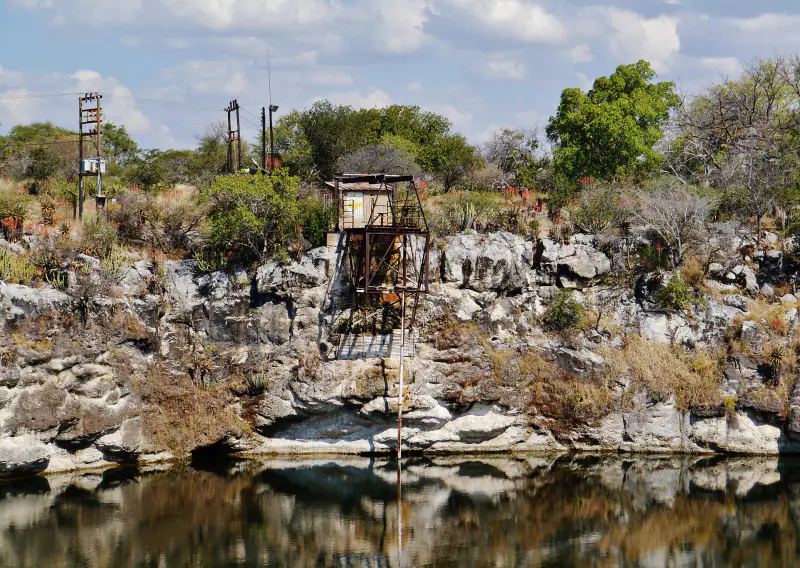
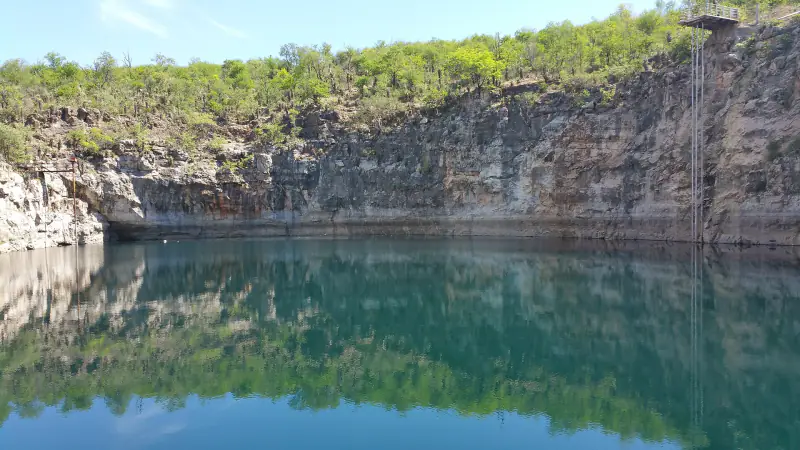
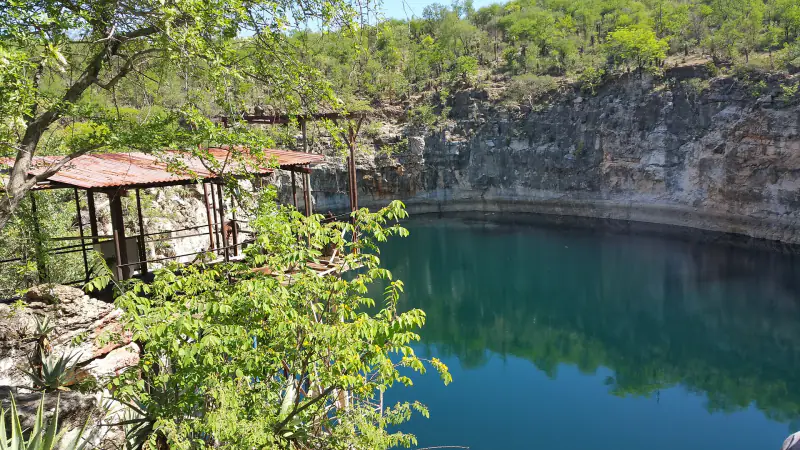
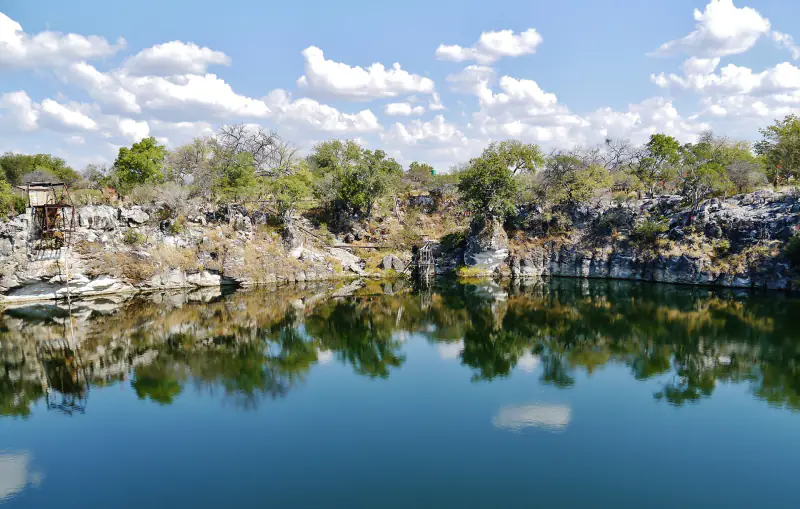
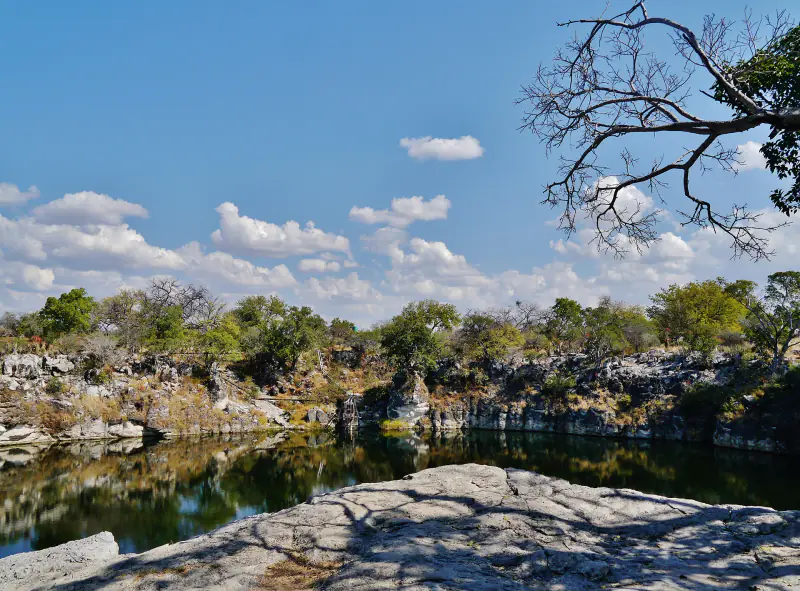
A round lake about 100 metres across, formed when the roof of a flooded cave collapsed.
A cave without a roof
Northern Namibia has a large area of dolomite with flooded caves below the surface. Otjikoto formed when the roof of one of these caves fell in. The walls are vertical, and the lake widens below the water line.
In 1915 German colonial troops threw rifles, ammunition and cannons into the lake before they surrendered to South African forces. Some pieces were later raised and are shown in the museum in Tsumeb.
Otjikoto Lake at a glance
- Location
- 20 km north-west of Tsumeb
- Type
- sinkhole lake in dolomite
- Diameter
- about 100 m
- Depth
- more than 60 m, deeper in side passages
- History
- weapons dumped by German troops in 1915
- Sister lake
- Guinas, about 30 km west
- Status
- national monument
- Time needed
- 30–60 minutes
Lake Guinas and Dragon's Breath
Lake Guinas, about 30 kilometres to the west, formed in the same way and is deeper. It lies on a private farm.
Dragon's Breath Cave near Grootfontein contains one of the largest known underground lakes in the world. It was found in 1986 and is open only to expeditions.
Otjikoto Lake in figures
In pictures
Select a photograph to enlarge it. Authors and licences are listed in the photo credits.
Before you go
Getting there
The lake is beside the B1 road between Tsumeb and Etosha National Park.
On the visit
A fenced path leads to viewpoints on the rim. There is a small entrance fee.
Good to know
Swimming is not allowed. Diving is limited to authorised clubs.
Opening times, access rules and prices change. Confirm them before you travel: the gate at the site.